7 Beauty Products I Wouldn’t Share—Even With a Good Friend
I have no problem lending a friend a hair dryer, perfume or a bottle of body lotion with a pump. But once a beauty product touches the eyes, lips, skin—or anything that can nick it—I become considerably less generous.

- Keep mascara, eyeliner, lip products, razors and personal applicators to yourself.
- Packaging matters: a pump bottle is easier to share hygienically than a jar or product repeatedly touched with fingers.
- Shared nail tools, brushes and sponges deserve more caution than many people realise because they can carry residue, microorganisms or traces of blood.
There is something wonderfully communal about getting ready with a friend. Someone always needs a mirror, someone has forgotten something, and eventually comes the inevitable: Can I borrow yours?
Usually, of course.
But not always.
The FDA’s advice is actually broader than mine: do not share cosmetics, because sharing can also mean sharing microorganisms. Dermatologists make the same point about makeup brushes and applicators.
In real life, though, not every bottle on the bathroom counter presents the same problem. These are the seven things I would keep personal.
1. Mascara
If there is one product I would never pass around, it is mascara.
The wand repeatedly travels from the tube to the eyelashes and back again, which gives whatever is on the applicator a route into the product. And because mascara is used so close to the eye, contamination matters more.
The FDA specifically says not to share eye cosmetics and advises discarding eye makeup used during an eye infection. It also warns against adding water—or, worse, saliva—to dried mascara.
My rule: mascara belongs to one person.
2. Eyeliner and Eye Pencils
Same neighbourhood, same caution.
Liquid liners and retractable eyeliners contact the eyelid repeatedly. A sharpenable pencil has one advantage: you can remove some of the exposed surface by sharpening it. That still would not persuade me to make communal eyeliner a thing.
FDA guidance is straightforward: instruments used around the eye should be clean, and eye cosmetics should not be swapped between people.
If you are doing someone else’s makeup, use proper hygienic techniques and disposable applicators rather than passing around your personal product.
3. Lipstick, Balm and Lip Gloss
This is where friendship usually tests my resolve.
A quick swipe of lipstick feels harmless, but it has been directly across another person’s lips. The American Academy of Dermatology notes that sharing makeup and applicators can transmit contagious conditions including cold sores.
Glosses with wand applicators are particularly easy to understand: the applicator touches the lips and then goes straight back into the tube.
For a makeup artist, lipstick can be scraped onto a clean palette and applied with a disposable applicator. Passing the actual tube from mouth to mouth is different.
4. Makeup Brushes and Sponges
I would probably worry about the brush before I worried about the foundation bottle.
Brushes and sponges collect product residue, skin oils, dead skin cells and microorganisms. The AAD recommends washing makeup brushes every seven to 10 days and says not to share them.
Sponges deserve the same personal-space rule. They are handled repeatedly and often used damp.
If your friend desperately needs foundation, dispensing a little from a pump onto a clean surface is one thing. Handing over the sponge you used that morning is another.
5. Razors
A razor is technically more grooming tool than makeup, but it absolutely belongs on this list.
Tiny nicks can expose the razor to microscopic amounts of blood. CDC guidance notes that hepatitis B and hepatitis C can, less commonly, be transmitted through shared personal items such as razors that have been contaminated with blood.
This is one item where “I rinsed it” would not reassure me.
Keep your razor yours.
6. Nail Clippers, Files and Cuticle Tools
The bottle of nail polish itself is not the thing I would worry about most. The tools that cut, scrape and work around the nail are the more sensible concern.
The CDC recommends cleaning nail-grooming tools before use and sterilising shared tools in commercial settings. CDC hepatitis guidance also identifies nail clippers as personal items that can transmit infection if contaminated with blood.
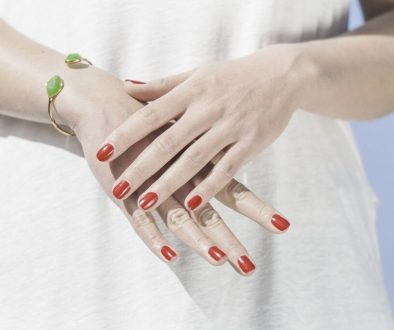
If someone wants your favourite red polish, I am considerably less concerned than if they ask for your cuticle nippers.
7. Anything You Keep Dipping Fingers Into
This category is easy to overlook.
Think moisturiser in a jar, lip balm in a pot, cream foundation, gel eyeliner or any other product repeatedly touched with fingers or applicators.
The FDA advises washing your hands before applying cosmetics, particularly when you need to dip your fingers into the container, and recommends keeping containers clean and properly closed.
That tells me something useful: packaging matters.
A pump that dispenses product without touching what remains inside is quite different from a jar into which several people keep dipping their fingers.
If I wanted to share something from a jar, I would use a clean spatula to transfer a small amount to a clean surface rather than inviting someone else into the original container.
The Part I Wouldn’t Overthink
I do not want this to turn the makeup bag into a biohazard zone.
Cosmetics are intended to be used safely when handled and stored appropriately. The useful lesson is simply that products touching eyes, lips, broken skin or reusable applicators deserve more caution. The FDA also recommends keeping cosmetics clean, properly closed and stored as directed.
And if a product develops an unusual colour, smell or texture, that is a much better reason to throw it away than an arbitrary panic over germs.
Share the perfume. Share the hair dryer. If a pump bottle can dispense product without anyone touching what remains inside, that can often be handled hygienically too. But mascara, lip products, personal applicators, razors and anything that can contact broken skin are where I stop being generous. Sometimes the nicest thing you can tell a friend is: “I’ll buy you one.”